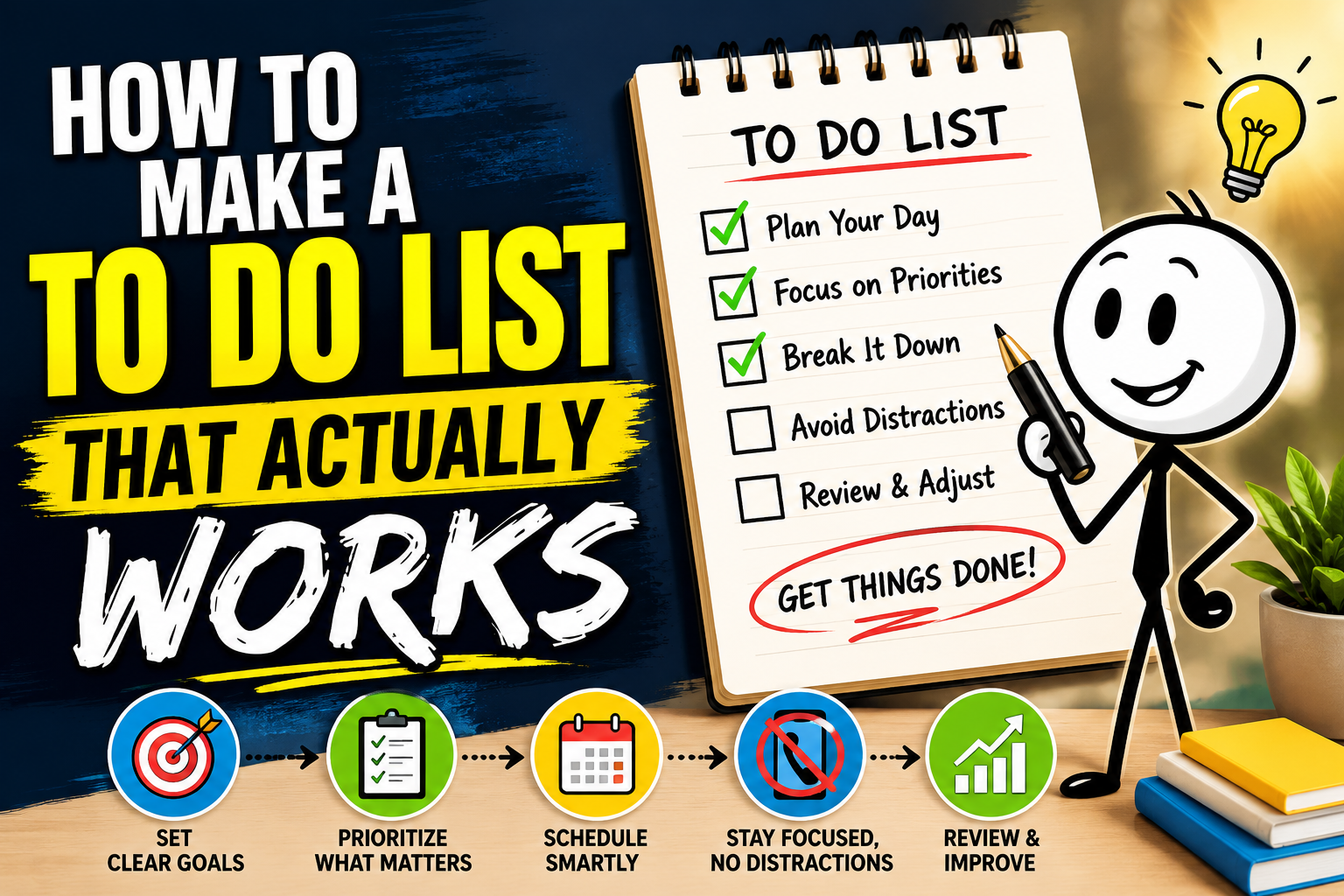
Most to-do lists fail. Not because people are lazy, but because the lists themselves are designed in a way that creates pressure instead of clarity.
A to-do list that actually works does three things well:
It captures what matters, reduces mental load, and makes the next action obvious. Everything else is optional.
Key Takeaways
- A good to-do list is short, clear, and limited
- Visibility matters more than volume
- The best lists reduce decision fatigue instead of adding to it
- Focus on what needs attention now, not everything you might do someday
- Review and reset regularly so the list stays trustworthy
Why Most To Do Lists Don’t Work
Traditional to-do lists often become dumping grounds. People add every task, idea, and obligation that crosses their mind. Over time the list grows long, overwhelming, and emotionally heavy.
When you open a list with 20+ items, your brain has to decide:
- What should I do first?
- What’s actually important today?
- What can wait?
That constant decision-making creates friction. Instead of helping you act, the list becomes another source of stress.
The problem isn’t the idea of a to-do list.
The problem is how most people use them.
The Core Principles of a Working To Do List
A to-do list that actually works follows a few simple rules:
1. Capture freely, but display selectively
Write everything down so nothing stays in your head. But only show yourself a small number of tasks at a time.
2. Make the next action obvious
Every task should be clear enough that you know exactly what to do without thinking.
3. Limit what you see
Fewer visible tasks usually lead to higher completion rates. Long lists create paralysis.
4. Separate “today” from “later”
Not everything belongs on today’s list. Protect your focus by keeping future tasks out of sight until they’re relevant.
5. Review regularly
A list only stays useful if you trust it. Quick daily or weekly reviews keep it accurate.
How to Make a To Do List That Actually Works (Step by Step)
Step 1: Brain Dump Everything
Start by getting every task, idea, and obligation out of your head. Don’t organize yet. Just write.
This clears mental clutter and prevents important things from being forgotten.
Step 2: Turn Vague Items into Clear Actions
Rewrite anything unclear.
- “Taxes” → “Gather last year’s documents”
- “Marketing” → “Write the email subject lines for the campaign”
- “Health” → “Book a dental checkup”
Clear tasks are easier to start.
Step 3: Separate Today from Everything Else
Create two simple groups:
- Today — Only the tasks that truly need attention now
- Later — Everything else
Be ruthless. Most tasks do not belong on today’s list.
Step 4: Limit Your Visible Tasks
Choose a small number of tasks to focus on (many people find 3 works well).
When only a few tasks are visible, starting feels easier and finishing feels more rewarding.
Step 5: Add Just Enough Structure
You don’t need complex systems. Helpful additions include:
- Due dates for time-sensitive tasks
- Simple priority if something is truly urgent
- Recurring tasks for things that repeat
Avoid over-organizing. Complexity is often the enemy of consistency.
Step 6: Review and Reset
At the end of the day or the start of the next one, take two minutes to:
- Check off completed tasks
- Move unfinished tasks if needed
- Choose the next small set of focus tasks
This keeps the list trustworthy.
Common Mistakes That Ruin To Do Lists
- Treating the list as a memory dump with no filtering
- Putting too many tasks in the “today” view
- Writing vague tasks that still require thinking
- Never reviewing the list
- Using the list to measure self-worth (“I didn’t finish everything, so I failed”)
A good list should reduce pressure, not increase it.
What a Working To Do List Feels Like
When your system is working, opening the list feels calm instead of stressful. You see a short set of clear tasks. You know what to do next. And you trust that everything else is safely stored for later.
The goal is not to do more.
The goal is to do the right things with less mental friction.
Final Thoughts
A to-do list that actually works is not the longest or the most detailed one. It’s the one you can trust, the one that stays manageable, and the one that helps you take action instead of creating more decisions.
Start simple. Capture everything. Show yourself less. Review often.
That combination is far more effective than any complicated productivity system.
Leave a Reply